Blue Dream Shrimp – Stunning Blue Freshwater Shrimp
Bring a splash of vibrant color to your aquarium with the Blue Dream Shrimp, a favorite among freshwater enthusiasts for its dazzling blue hue and peaceful temperament.
Key Features:
Color: Brilliant shades of blue, from light sky to deep sapphire
Size: 1 – 1.5 inches (2.5–3.8 cm)
Behavior: Peaceful, social, ideal for community tanks
Water Conditions: 68–78°F (20–26°C), pH 6.5–7.5, soft to moderately hard water
Diet: Omnivorous – algae, biofilm, shrimp pellets, and blanched vegetables
Breeding: Easy in a well-maintained tank; females carry eggs under their tails for 3–4 weeks
Why Choose Blue Dream Shrimp?These shrimp are perfect for planted aquariums, where they add color and help control algae. Their peaceful nature makes them ideal tank mates for small, non-aggressive fish, while their unique blue coloring will stand out beautifully against green plants and dark substrates.
Care Tips:
Maintain stable water conditions for vibrant color
Provide plenty of hiding spots and moss for grazing
Feed a balanced diet to enhance growth and hue
Add a touch of elegance to your aquarium with the Blue Dream Shrimp – small in size but big in beauty!
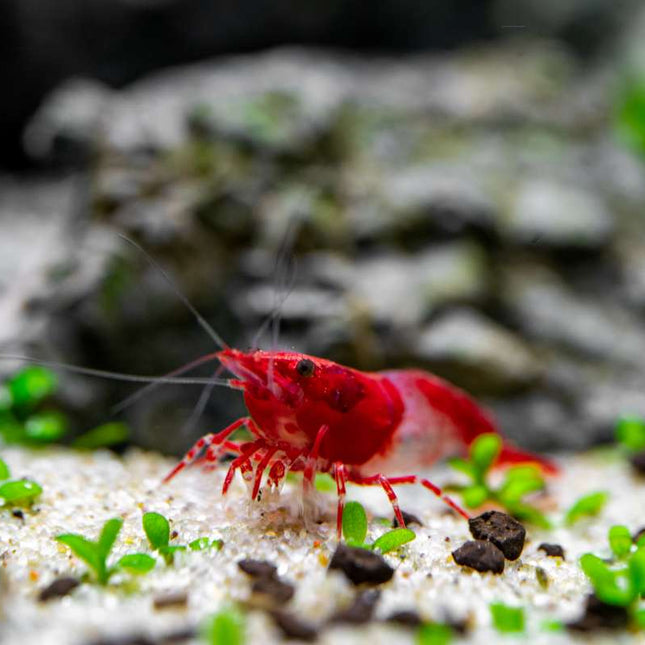
Red Rilli Shrimp
Overview
Add a splash of bright red and transparent color and lively movement to your aquarium with the Red Rilli Shrimp. Known for their vibrant red hues and hardy nature, these freshwater shrimp are perfect for planted tanks, nano tanks, and community aquariums. Red Rilli Shrimp are not only decorative but also help maintain a clean tank by grazing on algae and detritus.
Ideal for both beginners and experienced hobbyists, these shrimp are easy to care for and a charming addition to any aquascape.
Key Features
Vibrant coloration: Bright red and see trough shades make them a stunning focal point in any aquarium.
Algae grazers: Contribute to tank cleanliness by eating algae and organic debris.
Community-friendly: Peaceful and compatible with small, non-aggressive fish.
Hardy and resilient: Adapts well to a variety of freshwater conditions.
Compact size: Perfect for nano tanks, shrimp tanks, and larger aquascapes.
Specifications
Species: Red Rilli Shrimp
Type: Freshwater ornamental shrimp
Size: Approx. 2–3 cm adult size
Water parameters: pH 6.5–7.5, Temp 22–28°C
Diet: Algae, biofilm, sinking shrimp pellets, and vegetables
Benefits
Adds color and dynamic movement to aquariums.
Promotes a healthy and balanced ecosystem by grazing on algae.
Encourages natural behaviors and exploration in fish and shrimp.
Easy to care for and great for all levels of aquarists.
Care Tips
Maintain stable water parameters to ensure optimal health and coloration.
Provide plants, moss, and hiding places to reduce stress.
Feed a balanced diet of shrimp pellets, algae, and blanched vegetables.
Avoid aggressive tankmates that may prey on shrimp.
💡 Aquatic Pets SA Tip: Pair your Red Rilli Shrimp with Java Moss, Anubias nana petite, or small rocks to create a natural, vibrant aquascape full of life and color.
Add a touch of charm and activity to your aquarium with the Albino Corydoras, a hardy and peaceful bottom-dwelling fish loved by aquarists worldwide. Recognized by their striking white to pinkish bodies and bright red eyes, these small schooling catfish not only bring visual appeal but also help keep your tank clean by scavenging leftover food.
🐠 Key Features:
Scientific Name: Corydoras aeneus (Albino variety)
Size: Grows up to 5–7 cm in captivity
Temperament: Peaceful, ideal for community tanks
Lifespan: 5–10 years with proper care
Diet: Omnivorous – enjoys sinking pellets, flakes, and frozen/live foods
Activity Level: Active bottom dweller, great for adding movement to the lower levels of the tank
🌿 Tank Requirements:
Tank Size: Minimum 40 litres for a small group
Water Parameters:
Temperature: 22–28°C
pH: 6.0–7.5
Soft to moderately hard water
Substrate: Soft sand or fine gravel to protect their sensitive barbels
Environment: Provide hiding spots with plants, driftwood, or caves. They thrive in well-planted aquariums with gentle water flow.
✅ Why Choose Albino Corydoras?
Extremely hardy and beginner-friendly
Best kept in groups of 4 or more – they are social shoaling fish
Natural tank cleaners, helping to reduce leftover food buildup
Adds an eye-catching and lively presence to the bottom of your tank
💡 Care Tip: While they help clean up uneaten food, they still need proper feeding. Offer a varied diet to keep them healthy and active.
✨ Perfect choice for peaceful community aquariums and planted tanks!
Clown Loach (Each)
Please note picture is only a representation actual clown loaches are sold juvenile and will be smaller and may differ.
Add movement, personality and colour to your aquarium with the Clown Loach, one of the most loved freshwater community fish available. Known for their playful behaviour and striking orange and black striped pattern, clown loaches are a standout addition to any well-established tropical tank.
These active bottom dwellers are social fish that thrive in groups, making them both entertaining to watch and highly engaging in a community setup. They are excellent scavengers and help keep your aquarium lively as they explore every corner of the tank.
Clown loaches do best in stable, well-maintained tropical aquariums with plenty of hiding spaces, driftwood and soft substrates. As they grow, they become more confident and interactive, often displaying unique group behaviours.
Key features:
Sold individually (recommended to keep in groups)
Striking orange and black striped pattern
Active, playful and highly social fish
Great for community tropical aquariums
Helps control leftover food in the substrate
Long-lived species with proper care
Care requirements:
Tropical freshwater aquarium
Soft substrate with hiding spaces
Stable, well-filtered water conditions
Best kept in groups of 3 or more
Feeding guide:Omnivorous diet including sinking pellets, wafers, and occasional frozen or live foods. Feed 1–2 times daily in small amounts.
A perfect choice for aquarists looking to add energy, personality and movement to their aquarium setup.
Black Widow Tetra – Bold Contrast & Graceful Movement
Introduce dramatic flair to your aquarium with the Black Widow Tetra. With its deep charcoal body, flowing fins, and active personality, this hardy schooling fish adds a bold yet elegant touch to any freshwater setup.
Key Features:
🐟 Striking Appearance: Dark body with semi-transparent fins and a subtle shimmer
🤝 Peaceful Nature: Great for community tanks
📏 Size: Reaches up to 5–6 cm in length
💧 Water Conditions: pH 6.0–7.5 | Temperature 22–28°C
👨👩👧👦 Schooling Fish: Thrives in groups of 6 or more
Highly adaptable and visually captivating, the Black Widow is a favorite among aquarists for its contrast, schooling behavior, and low-maintenance care.
Care Level: EasyDiet: Omnivorous – accepts flakes, pellets, frozen, and live foods
Bring balance, movement, and mystery to your tank with this classic freshwater favorite.
Penguin Tetra
The penguin tetra (scientific name: Thayeria boehlkei) is a freshwater aquarium fish popular with fish keepers. It comes from the Amazon Basin in South America (Brazil, Peru, etc.).
Why is it called “penguin”?
It gets its name from its look:
It has a black stripe running along its body and tail
Its coloring kind of resembles a penguin’s black-and-white pattern
Size & appearance
Grows to about 4–6 cm (1.5–2.5 inches)
Slim, silvery body
Distinct black line from eye to tail
Often swims at a slight angle (head up), which looks unusual
Behavior
Peaceful and social fish
Likes to live in groups (schools) of 6 or more
Active swimmers and fun to watch in aquariums
Diet
They’re omnivores, meaning they eat:
Small insects and larvae
Algae and plant matter
Fish flakes or pellets in aquariums
Why people keep them
Easy to care for (good for beginners)
Look attractive in tanks
Add movement and life to aquariums
Super Red Pleco (Ancistrus cf. cirrhosus) – Vibrant Algae-Eating Bristlenose
Add bold color and hardworking algae control to your aquarium with the Super Red Pleco. A striking color variety of the Bristlenose Pleco, scientifically known as Ancistrus cirrhosus, this freshwater favorite is prized for its intense red-orange coloration, manageable size, and excellent tank-cleaning ability.
Unlike Common Plecos, Super Red Plecos stay relatively small—making them ideal for community aquariums.
Product Highlights
Brilliant red-orange coloration – Eye-catching centerpiece fish
Excellent algae eater – Helps keep glass, décor, and driftwood clean
Smaller adult size – Perfect for medium-sized aquariums
Peaceful temperament – Great for community tanks
Hardy and beginner-friendly – Adaptable to stable freshwater setups
Size & Growth
Current Size: 1.5–3 inches (juvenile)
Adult Size: 4–6 inches
Recommended Tank Size: 30+ gallons
Super Red Plecos remain compact compared to larger pleco species, making them much easier to accommodate long-term.
Care Requirements
Water Temperature: 72–80°F
pH Range: 6.5–7.5
Diet: Algae, sinking algae wafers, spirulina pellets, blanched vegetables (zucchini, cucumber), and driftwood
Tank Setup: Provide caves, driftwood, and shaded hiding areas
Males develop signature facial bristles as they mature, adding to their unique appearance.
Tank Mates
Compatible with:
Tetras
Rasboras
Corydoras
Gouramis
Other peaceful community fish
Avoid housing with aggressive or fin-nipping species.
Why Buy From Aquatic Petssa?
At Aquatic Petssa, we carefully select and condition each Super Red Pleco to ensure vibrant coloration, strong health, and smooth acclimation to your aquarium.
Important Reminder
While smaller than Common Plecos, Super Red Plecos still require proper filtration, driftwood, and a well-maintained aquarium to thrive long-term.
Bring home a stunning red algae-eater that combines beauty, personality, and practicality in one incredible freshwater fish.
Balloon Molly
Scientific Name
Poecilia sphenops (Balloon Variety)
Common Name
Balloon Molly
Product Description
Add a unique and eye-catching fish to your aquarium with the Balloon Molly. Known for its distinctive rounded body shape, vibrant colors, and peaceful nature, the Balloon Molly is a popular choice among beginner and experienced aquarists alike. These active livebearers bring constant movement and personality to community aquariums while being easy to care for and adaptable to a wide range of water conditions.
Balloon Mollies are available in a variety of stunning colors, including black, gold, silver, dalmatian, orange, and mixed varieties. Their compact, balloon-shaped body gives them a charming appearance that stands out in any freshwater aquarium.
As livebearing fish, Balloon Mollies can reproduce readily in suitable aquarium conditions, making them an exciting species for hobbyists interested in breeding. They thrive in planted aquariums and appreciate open swimming areas combined with plenty of hiding places among plants and décor.
Key Features
Unique rounded "balloon" body shape
Peaceful and community-friendly fish
Available in various attractive colors and patterns
Hardy and suitable for beginner aquarists
Active swimmers that add movement to the aquarium
Livebearing species capable of breeding in home aquariums
Compatible with many other peaceful freshwater fish
Care Information
Care Level
Easy
Temperament
Peaceful
Diet
Omnivore
Minimum Tank Size
60 Litres
Water Temperature
24°C – 28°C
pH Range
7.0 – 8.2
Adult Size
5 – 8 cm
Lifespan
2 – 5 Years
Feeding
Balloon Mollies are omnivores and enjoy a varied diet. Feed a high-quality flake or pellet food supplemented with algae-based foods, blanched vegetables, and occasional treats such as bloodworms, daphnia, or brine shrimp. A balanced diet helps maintain vibrant colours and overall health.
Tank Mates
Suitable tank mates include:
Guppies
Platies
Swordtails
Corydoras
Tetras
Rasboras
Peaceful Gouramis
Bristlenose Plecos
Avoid keeping them with aggressive or fin-nipping fish.
Important Notes
Mollies prefer stable water conditions and good filtration.
A planted aquarium helps them feel secure and display natural behaviour.
Regular water changes are recommended to maintain optimal health.
Colours and patterns may vary between individual fish.
Images are for illustration purposes only; actual fish may differ in colour, size, and pattern.
Why Choose Balloon Mollies?
Balloon Mollies are a fantastic addition to community aquariums thanks to their peaceful temperament, attractive appearance, and ease of care. Their unique body shape and lively personality make them a favourite among freshwater fish keepers looking to add something special to their aquarium.
The Pygmy Gourami — also called the Sparkling Gourami is one of the smallest labyrinth fish kept in aquariums. It’s popular because of its shimmering colors, interesting behavior, and tiny size.
Overview
Scientific name: Trichopsis pumila
Adult size: ~1.5–2 inches (4–5 cm)
Lifespan: about 4–5 years with good care
Origin: Southeast Asia — especially Thailand, Cambodia, and Vietnam
Temperament: peaceful but shy
Difficulty: beginner to intermediate
Appearance
Despite being tiny, they’re surprisingly flashy:
iridescent blue-green scales that “sparkle” under light
red/orange striping
translucent fins with blue speckles
large eyes relative to body size
Males are usually more colorful and slightly slimmer than females.
Unique Trait: They “Croak”
Like other members of the genus Trichopsis, pygmy gouramis can produce audible clicking or croaking sounds, especially:
during territorial displays
courtship
mild arguments between males
In a quiet room, aquarists can sometimes hear them outside the tank.
Behavior
They’re:
calm and slow-moving
curious once comfortable
often found hovering among plants near the surface
At first they can be very timid. Dense plants help them feel secure.
Tank Setup
A heavily planted aquarium works best.
Ideal conditions
Tank size: 10 gallons (38 L)+
Temperature: 24–28°C (75–82°F)
pH: 6.0–7.5
Flow: low/gentle
Lighting: dim to moderate
Floating plants are especially appreciated because they mimic their natural habitat.
Tank Mates
Good companions include:
tiny rasboras
ember tetras
small peaceful shrimp
pygmy corydoras
Rathburn’s Tetra
A striking, peaceful schooling fish perfect for vibrant community aquariums
Add a touch of elegance and movement to your aquarium with the beautiful Rathburn’s Tetra. Known for its shimmering silver body and subtle warm tones, this active schooling fish brings life and balance to any freshwater setup.
Why You’ll Love Rathburn’s Tetra
Peaceful temperament – Ideal for community tanks
Active schooling fish – Best kept in groups of 6 or more
Eye-catching appearance – Sleek body with a soft metallic sheen
Hardy & adaptable – Suitable for beginner and experienced aquarists
Care Requirements
Tank Size: Minimum 60L
Temperature: 22–26°C
pH: 6.0 – 7.5
Diet: Omnivore – accepts flakes, pellets, and frozen foods
Lifespan: 3–5 years with proper care
Tank Setup Tips
Rathburn’s Tetras thrive in well-planted aquariums with open swimming space. Adding live plants, driftwood, and gentle filtration helps recreate their natural environment and enhances their colours.
Compatibility
These tetras are peaceful and do well with:
Other small tetras
Rasboras
Corydoras
Dwarf gouramis
Avoid housing with aggressive or much larger fish.
What to Expect
At Aquatic Pets SA, we take pride in delivering healthy, well-acclimated fish. Your Rathburn’s Tetra will be carefully packed to ensure it arrives safely and stress-free.
Pro Tip: Keeping them in a larger group will boost their confidence and bring out their best natural behaviour and colouration.
Angelfish are beautiful freshwater fish popular in home aquariums. Their scientific genus is Pterophyllum, and they belong to the Cichlidae family.
Where they come from
Angelfish naturally live in slow-moving rivers and floodplains of the Amazon River basin in Brazil, Peru, and Colombia. They like warm water with plants and hiding places.
Size and lifespan
Size: Usually 15 cm (6 inches) long, but with tall fins they can look bigger.
Lifespan: About 8–10 years in a well-kept aquarium.
Types of angelfish
Common aquarium varieties include:
Silver angelfish
Marble angelfish
Gold angelfish
Koi angelfish
Black angelfish
These varieties are mostly bred from the species Pterophyllum scalare.
What they eat
Angelfish are omnivores, meaning they eat both plants and animals. Typical foods include:
Flake or pellet fish food
Frozen or live foods like bloodworms and brine shrimp
Small insects or larvae
Aquarium care basics
Tank size: At least 75–100 liters (20–30 gallons)
Water temperature: 24–28 °C
pH: 6.5–7.5
Tankmates: Peaceful fish like tetras, but avoid very small fish they might eat.
Breeding
Angelfish can lay hundreds of eggs on flat surfaces like leaves or rocks. Both parents often guard the eggs until they hatch.
Pearl Danio (Danio albolineatus)
Bring vibrant movement and color to your aquarium with the Pearl Danio. Known for its shimmering pearl-like body and energetic swimming, this peaceful freshwater fish is perfect for beginner and experienced aquarists alike.
Key Features
Beautiful iridescent pearl and blue coloration
Peaceful community fish
Very active and entertaining to watch
Hardy and easy to care for
Care Information
Size: Up to 6 cm (2.5 inches)
Temperature: 20–26°C (68–78°F)
pH: 6.5–7.5
Tank size: Minimum 40 liters (10 gallons)
Diet: Flake food, micro pellets, brine shrimp, and small live foods
BehaviorPearl Danios are schooling fish and should be kept in groups of at least 5–6. They are very active swimmers and do best in aquariums with open swimming space.
Why Buy Pearl Danio?These fish are perfect for community tanks and add constant motion and sparkle to any aquarium. Their hardy nature makes them ideal for beginners starting their first aquarium.
The GMO Widow Tetra is a genetically engineered freshwater fish designed for aquariums. Its aesthetic and biological modifications make it both visually striking and resilient for home aquarists.
Appearance
Body Color: Deep black, inspired by the black widow spider.
Markings: Vibrant red spots or streaks on the tail and dorsal fins, reminiscent of a widow’s hourglass pattern.
Glow/Fluorescence: Certain areas (like fins or lateral stripes) may fluoresce under LED or blue aquarium lighting.
Size: Typically 1.5–2 inches (4–5 cm), maintaining the small, schooling nature of traditional tetras.
Behavior and Temperament
Schooling Fish: Prefers to swim in groups of 6 or more.
Peaceful Yet Bold: Compatible with many community fish but stands out due to its unique color patterns.
Activity: Active swimmers, enjoy mid-to-upper levels of the tank.
Genetic Modifications
Color Enhancement: Red-black contrast with glowing fins for striking aquarium display.
Disease Resistance: Genetically engineered to withstand common bacterial and fungal infections.
Environmental Adaptability: Can tolerate a wider range of pH and temperature, making it more suitable for diverse home aquariums.
Controlled Growth: Maintains small size for standard tanks without overpopulating.
Care Requirements
Tank Size: Minimum 20 gallons for a small school.
Water Conditions: Temperature 72–80°F (22–27°C), pH 6.5–7.5.
Diet: Omnivorous; accepts flakes, frozen, and live foods.
Lighting: Blue or LED lighting enhances fluorescent markings.
Congo Tetra
Scientific Name: Phenacogrammus interruptus
Family: Alestidae (African Characins)
Origin: Congo River Basin, Central Africa
Size: 3 to 3.5 inches (7.5 to 9 cm); males may grow larger than females
Lifespan: 4 to 5 years (can live longer with excellent care)
🌈 Appearance
Males display iridescent colors—blue, violet, green, and orange—especially under good lighting.
Flowing, long fins with white edges are a hallmark of mature males.
Females are usually smaller and less colorful but still attractive.
🧠 Behavior and Temperament
Peaceful, schooling fish.
Best kept in groups of 6 or more to prevent fin nipping and stress.
Great for community tanks with other non-aggressive fish.
🏡 Tank Requirements
Tank Size: Minimum 30 gallons (for a school)
Water Temperature: 73–82°F (23–28°C)
pH: 6.0–7.5
Water Hardness: Soft to moderately hard (3–18 dGH)
Decor: Heavily planted with open swimming areas, dim lighting to mimic natural habitat
🍽️ Diet
Omnivorous: Accepts flakes, pellets, live and frozen foods.
A varied diet enhances their coloration—offer brine shrimp, daphnia, and bloodworms.
🐣 Breeding
Can be bred in captivity, but requires separate breeding tank.
Soft, acidic water and fine-leaved plants or spawning mops help encourage spawning.
Eggs are scattered and should be protected from adult fish, as they may eat them.
Telescope Eye Black Moor
It’s a variety of the telescope eye goldfish (a goldfish with big protruding eyes).
The Black Moor is simply the black-colored version of that type.
Scientific name: Carassius auratus (same as all goldfish).
Key features
1. Telescope eyes
The most distinctive trait: large, bulging eyes that stick out from the head.
These develop as the fish grows.
2. Black coloration
Deep velvet-like black scales (can sometimes fade to grey/orange over time).
3. Body shape
Round, egg-shaped body
Long flowing fins and a double tail
4. Poor eyesight
Because of their eye shape, they don’t see well and are slow swimmers.
Size & lifespan
Size: about 10–25 cm (4–10 inches)
Lifespan: 10–25 years with proper care
Origin
First bred in China hundreds of years ago through selective breeding.
Care basics
Freshwater fish (aquarium or pond)
Temperature: around 18–25°C
Diet: pellets, flakes, plus treats like worms or shrimp
Best kept with other slow, gentle goldfish (they struggle to compete for food)
Important things to know
Their eyes are very delicate and can get injured easily
Avoid sharp decorations in the tank
Because they swim slowly, faster fish can outcompete them for food
Why people like them
Unique “cute” look with big eyes
Calm and friendly temperament
Good for beginners compared to some other fancy goldfish
Golden Severum
Scientific Name: Heros severus (Gold/Golden morph)
Common Name: Golden Severum, Gold Severum
Family: Cichlidae
Origin: South America (Amazon Basin)
Size: 6–8 inches (15–20 cm), sometimes up to 10 inches
Lifespan: 5–10 years (with proper care)
🌟 Appearance
Vibrant golden-yellow body with subtle orange hues.
Rounded body shape, long fins.
Eyes may appear reddish.
Some may show faint vertical bars or iridescent spots.
🧠 Temperament and Behavior
Semi-aggressive, especially during breeding.
Generally more peaceful than many large cichlids.
Can be kept with other robust, similarly sized fish—but avoid small or overly aggressive tankmates.
Intelligent and personable; they often recognize and interact with their owners.
🏡 Tank Requirements
Tank Size: Minimum 55 gallons for one; 75+ gallons for a pair or community.
Water Temperature: 75–82°F (24–28°C)
pH: 6.0–7.5
Water Hardness: Soft to moderately hard (4–15 dGH)
Tank Setup:
Sand or fine gravel substrate.
Hiding spots: driftwood, caves, rocks.
Hardy plants (they may uproot or nibble softer plants).
Moderate filtration and regular water changes are essential.
🍽️ Diet
Omnivorous: Accepts high-quality pellets, flakes, and fresh or frozen foods.
Supplement with:
Vegetables (blanched spinach, peas, zucchini)
Protein (bloodworms, brine shrimp, krill)
A varied diet helps maintain vibrant color and health.
🐣 Breeding
Golden Severums form monogamous pairs.
They lay eggs on flat surfaces (rocks, broad leaves).
Both parents guard the eggs and fry.
Breeding can be aggressive—best done in a separate tank.
🤝 Tank Mates
Choose peaceful to semi-aggressive, similarly sized fish, such as:
Silver Dollars
Large Tetras (e.g., Congo Tetras)
Angelfish (with caution)
Plecos (bristlenose, rubberlip)
Other peaceful cichlids (e.g., Keyholes, Firemouths)
Albino Widow Tetra – A Striking Beauty for Your Aquarium
Add a touch of ethereal elegance to your tank with the Albino Widow Tetra. Known for its translucent, pale body and distinctive red eyes, this peaceful schooling fish is both captivating and easy to care for — making it perfect for beginners and experienced aquarists alike.
Key Features:
🌿 Peaceful & Community-Friendly: Ideal for mixed-species tanks
✨ Unique Appearance: Soft white coloring with stunning red eyes
📏 Size: Grows up to 5 cm in length
💧 Water Parameters: pH 6.0–7.5 | Temperature 22–28°C
🐠 Best Kept In Groups: Keep in schools of 6+ for optimal comfort and behavior
Whether you're building a serene aquascape or adding variety to your collection, the Albino Widow brings grace and tranquility to any setup.
Care Level: EasyDiet: Omnivore (enjoys flakes, micro pellets, and frozen foods)
A Black Common Pleco (15–16 cm) is a freshwater sucker-mouth catfish commonly kept as a bottom-dweller and algae grazer.
About the Black Common Pleco
Adult size: Depending on the exact species, Common Plecos can reach around 30–45+ cm, so they eventually need a large aquarium.
Temperament: Generally peaceful, although large adults can become territorial with other bottom-dwelling fish.
Activity: Mostly nocturnal. You may see it become much more active after the aquarium lights go off.
Diet: Although it eats algae and biofilm, it cannot live on algae alone. Provide sinking algae wafers, vegetables such as zucchini/cucumber, and other suitable pleco foods.
Aquarium: Provide driftwood, caves and hiding places. Strong filtration is recommended because larger plecos produce quite a lot of waste.
Water: They are adaptable but do best in stable, clean, well-filtered freshwater.
Tank mates: Usually suitable with peaceful community fish, provided the aquarium is large enough and there is adequate space for everyone.
Important for a 15–16 cm Pleco
At 15–16 cm, it is already a fairly substantial fish, but it is not its adult size. I would avoid putting one in a small aquarium simply because it currently fits. A Common Pleco is better suited to a large aquarium, particularly as it grows.
The Red Ryukin goldfish is a color variety of the fancy Ryukin goldfish, which itself is a selectively bred type of goldfish known for its dramatic body shape and ornamental appearance.
Key features
Color: Bright red to orange-red (sometimes deep crimson)
Body shape: Short, deep-bodied with a pronounced “hump” behind the head
Tail: Long, flowing double tail (often fan-shaped)
Size: Usually 15–20 cm (can grow larger in good conditions)
Care requirements
Tank size: At least 75–100 liters per fish (more space = healthier fish)
Water temperature: 18–22°C (cool-water species)
Filtration: Strong filter needed (they produce a lot of waste)
Water quality: Very important—ammonia/nitrite must be zero
Feeding
Sinking goldfish pellets (main diet)
Frozen/live foods: bloodworms, daphnia, brine shrimp
Vegetables: peas, zucchini, spinach (helps digestion)
Behavior
Peaceful and social
Best kept with other fancy goldfish (not fast or aggressive fish)
Not ideal for outdoor predators or mixed tropical tanks
Lifespan
With proper care: 10–15 years, sometimes longer
Malawi cichlids are famous for their bright colors, active behavior, and interesting social structures. While many species grow medium to large, there are smaller species that stay under 4 inches, perfect for moderately sized aquariums.
Key facts about small Malawi cichlids:
Origin: Lake Malawi, East Africa
Habitat: Rocky shores (Mbuna types) or open sandy areas (Haplochromis types)
Size: Small species typically 2–4 inches (5–10 cm)
Popular Small Malawi Cichlids
1. Mbuna (Rock-dwelling)
Examples:
Pseudotropheus demasoni – striking blue with black stripes, very territorial.
Labidochromis caeruleus “Electric Yellow” – bright yellow, hardy, peaceful compared to other Mbuna.
Tank Notes: Prefer rocky environments with caves; aggressive toward same species or similar colors.
2. Haplochromis (Open water/sand dwellers)
Examples:
Iodotropheus sprengerae (Rusty Cichlid) – orange and brown, peaceful, stays small.
Aulonocara species (Peacock cichlids) – some smaller variants under 4 inches; vibrant colors.
Tank Notes: Like more swimming space, moderate to calm community behavior.
Care Requirements
Tank Size: Minimum 30–40 gallons for a small group (5–6 fish).
Water Conditions: pH 7.8–8.6, temperature 75–82°F (24–28°C), hard water preferred.
Diet: High-quality cichlid pellets, occasional frozen or live food.
Behavior: Can be territorial; provide rocks/caves for hiding and territory.
LongfinLemon Blue Eye Ancistrus (Ancistrus sp.) – Bright Yellow Bristlenose Pleco
Add vibrant color and personality to your aquarium with the Lemon Blue Eye Ancistrus. This stunning Bristlenose Pleco variety, classified within the genus Ancistrus, is prized for its bright lemon-yellow body and striking blue eyes.
Compact, hardy, and peaceful, the Lemon Blue Eye Ancistrus is an excellent algae-eating addition to community aquariums.
Product Highlights
Bright lemon-yellow coloration – Stands out beautifully in planted and natural tanks
Distinct blue eyes – Unique and eye-catching feature
Excellent algae grazer – Helps maintain clean glass and décor
Compact adult size – Ideal for medium aquariums
Peaceful and hardy – Great for beginner and experienced aquarists
Size & Growth
Current Size: 1.5–3 inches (juvenile)
Adult Size: 4–5 inches
Recommended Tank Size: 30+ gallons
Unlike larger pleco species, Lemon Blue Eye Ancistrus remain manageable in size, making them perfect for long-term community setups.
Care Requirements
Water Temperature: 72–80°F
pH Range: 6.5–7.5
Diet: Algae, sinking algae wafers, spirulina pellets, blanched vegetables (zucchini, cucumber), and driftwood
Tank Setup: Provide caves, driftwood, and shaded hiding spaces
Males develop bristles on their faces as they mature, while females typically have smaller or no bristles.
Tank Mates
Compatible with:
Tetras
Rasboras
Corydoras
Gouramis
Other peaceful freshwater species
Avoid aggressive or highly territorial tank mates.
Why Buy From Aquatic Petssa?
At Aquatic Petssa, each Lemon Blue Eye Ancistrus is carefully selected and conditioned to ensure strong health, vibrant coloration, and smooth acclimation into your aquarium.
Oscar Cichlid
Scientific Name: Astronotus ocellatus
Common Names: Oscar, Tiger Oscar, Albino Oscar
Family: Cichlidae
Origin: South America – Amazon River basin
Size: 10–12 inches (25–30 cm), occasionally up to 14"
Lifespan: 10–15 years (with proper care)
🔥 Varieties
Variety
Appearance
Tiger Oscar
Dark body with bright orange-red patterns (tiger-like), very striking.
Albino Oscar
Pale white to yellowish body with red or orange markings; red/pink eyes.
🎨 Other Oscar morphs include Red Oscar, Lemon Oscar, and Veil Tail Oscar, but Tiger and Albino are among the most common.
🧠 Personality & Behavior
Highly intelligent, trainable (can be hand-fed, may recognize owners).
Can be aggressive or territorial, especially in confined spaces.
Need lots of space — they're messy and fast-growing.
Best kept solo, in pairs, or with carefully selected tank mates.
🏡 Tank Requirements
Tank Size:
55 gallons for 1 Oscar (minimum)
75–100+ gallons for 2 Oscars or with tankmates
Temperature: 74–81°F (23–27°C)
pH: 6.0–7.5
Hardness: Soft to moderate (3–15 dGH)
Tank Setup:
Sand or fine gravel substrate
Heavy-duty filtration (Oscars are messy eaters)
Hiding spots (rocks, driftwood), but they may rearrange decor
Live plants usually get uprooted or destroyed — use tough or fake plants
🍽️ Diet
Omnivorous:
High-quality cichlid pellets (main diet)
Frozen or live foods: bloodworms, krill, earthworms
Occasional vegetables: peas, spinach (blanched)
Avoid: feeder fish (risk of parasites), fatty meats
Feed 1–2 times daily in small portions to avoid water pollution.
🐣 Breeding
Oscars form monogamous pairs and lay eggs on flat surfaces.
Breeding in captivity is possible, but aggression increases during spawning.
Both parents will defend the eggs and fry.
🤝 Tank Mates (with Caution)
Choose tank mates that are:
Large enough not to be eaten
Tough enough to withstand mild aggression
Not overly aggressive themselves
Suitable tank mates:
Severum Cichlids
Silver Dollars
Large Plecos
Firemouths
Jack Dempseys (if tank is big enough)